Chelsea Flower Show 2026: Developing the reciprocal frame at the heart of our garden
As we move steadily toward the RHS Chelsea Flower Show 2026, one element of our design has become a powerful symbol of what this garden represents. At the centre of our space sits a reciprocal frame — a deceptively simple yet beautifully intricate structure that has grown from matchstick models on our studio table into a crafted timber form being shaped by skilled hands.
Today, we’re excited to share more about its development and why it means so much to this project.
Rob Hardy & Co is an award-winning garden design studio in Leeds, creating bespoke outdoor spaces across Yorkshire and beyond. As we continue our journey towards the RHS Chelsea Flower Show 2026, explore our Chelsea show garden story, discover our bespoke garden design services in Leeds and Yorkshire, and follow more behind-the-scenes updates from the studio on our garden design blog.
What is a reciprocal frame?
A reciprocal frame is a self-supporting architectural structure created by a series of beams that rest on one another in a repeating pattern. Each beam is supports, and is in turn supported by, its neighbour. None can stand alone. It’s an ancient concept found in many cultures, celebrated for its elegance, strength, and the way it uses geometry to distribute weight without the need for a central support.
At its core, a reciprocal frame is about interdependence, with a group of individual pieces creating something far greater when they work together.
Which makes it the perfect symbol for our garden’s message.
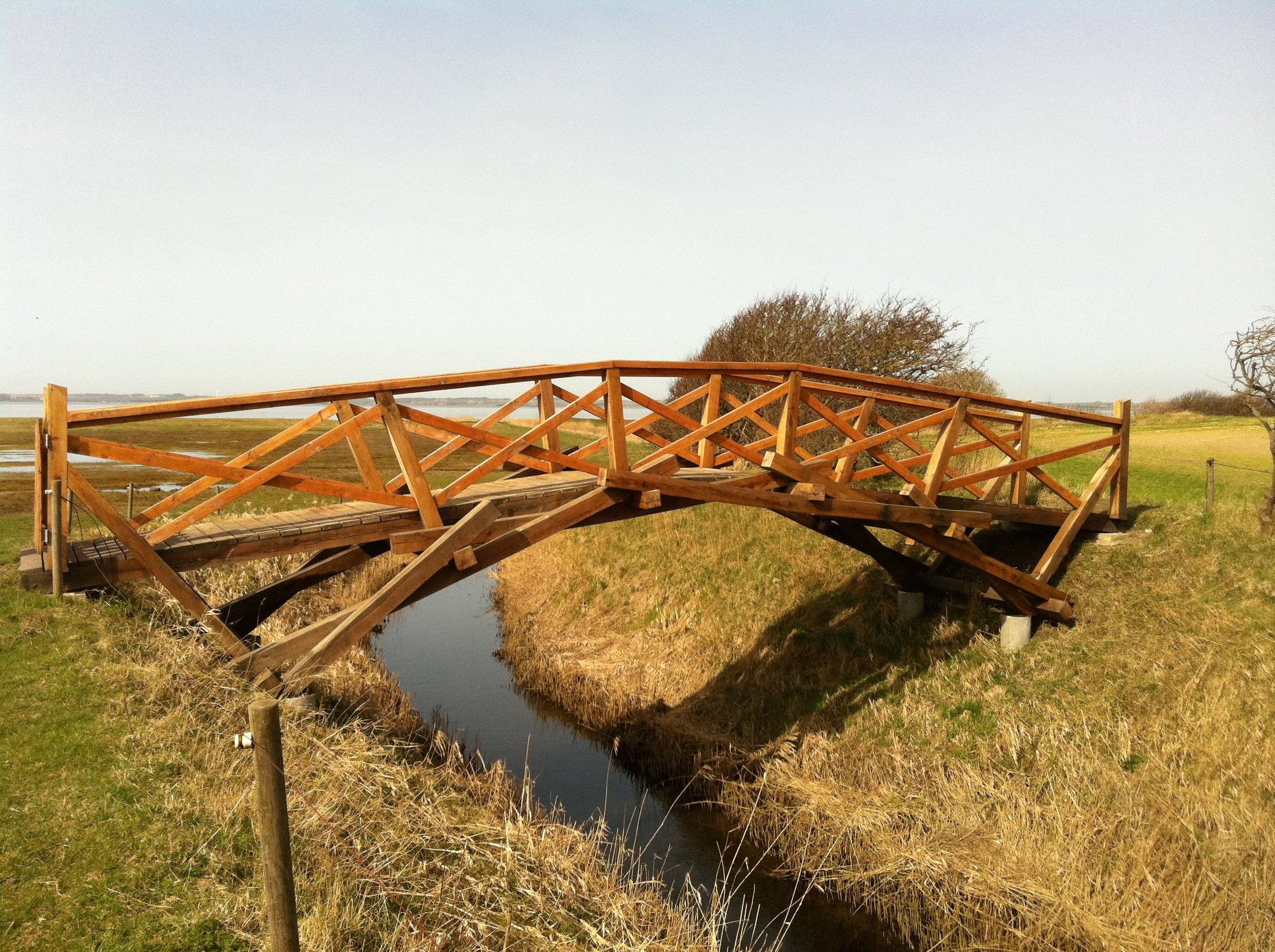
A bridge built using Leonardo da Vinci's reciprocal design to self support.
A structure that represents shared purpose
From the very beginning, our Chelsea garden has been rooted in Trussell’s key message that ending hunger is not something any one person, organisation, or nation can achieve in isolation. It requires joint effort, shared responsibility, and collaboration across communities.
The reciprocal frame captures this beautifully. Each beam leans on the next, just as progress depends on collective action. It becomes a visual metaphor for the network of support needed to create meaningful, lasting change.
From matchsticks to engineering models
The journey began in the simplest way imaginable: with matchsticks spread across the studio table. We built and rebuilt miniature frames, experimenting with angles, layering beams, and adjusting proportions. These early models were small, delicate and held together with patience and hope but they helped shape the idea that would anchor the entire garden.
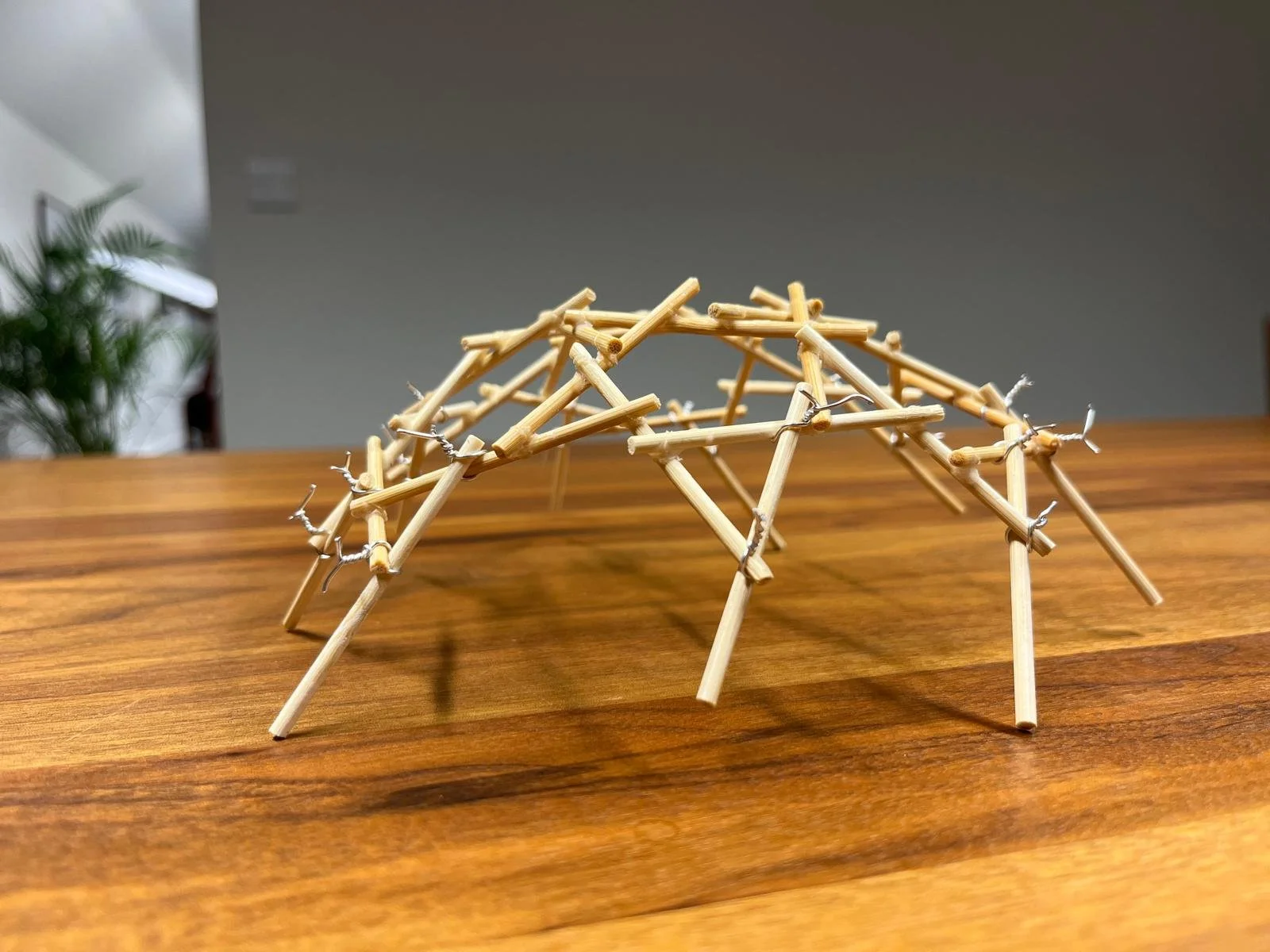
An early model made out of kebab sticks
As the concept grew, we turned to Mohamed Ali, whose expertise has been invaluable. Together we explored load paths, timber thicknesses, fixing points, and the fine balance between beauty and practicality. Many conversations were spent wrestling with angles and geometry, always searching for the point where elegance meets engineering integrity.
These sessions brought the reciprocal frame to life in a new way, transforming it from a creative sketch into a structure that could stand proudly in the grounds of Chelsea.
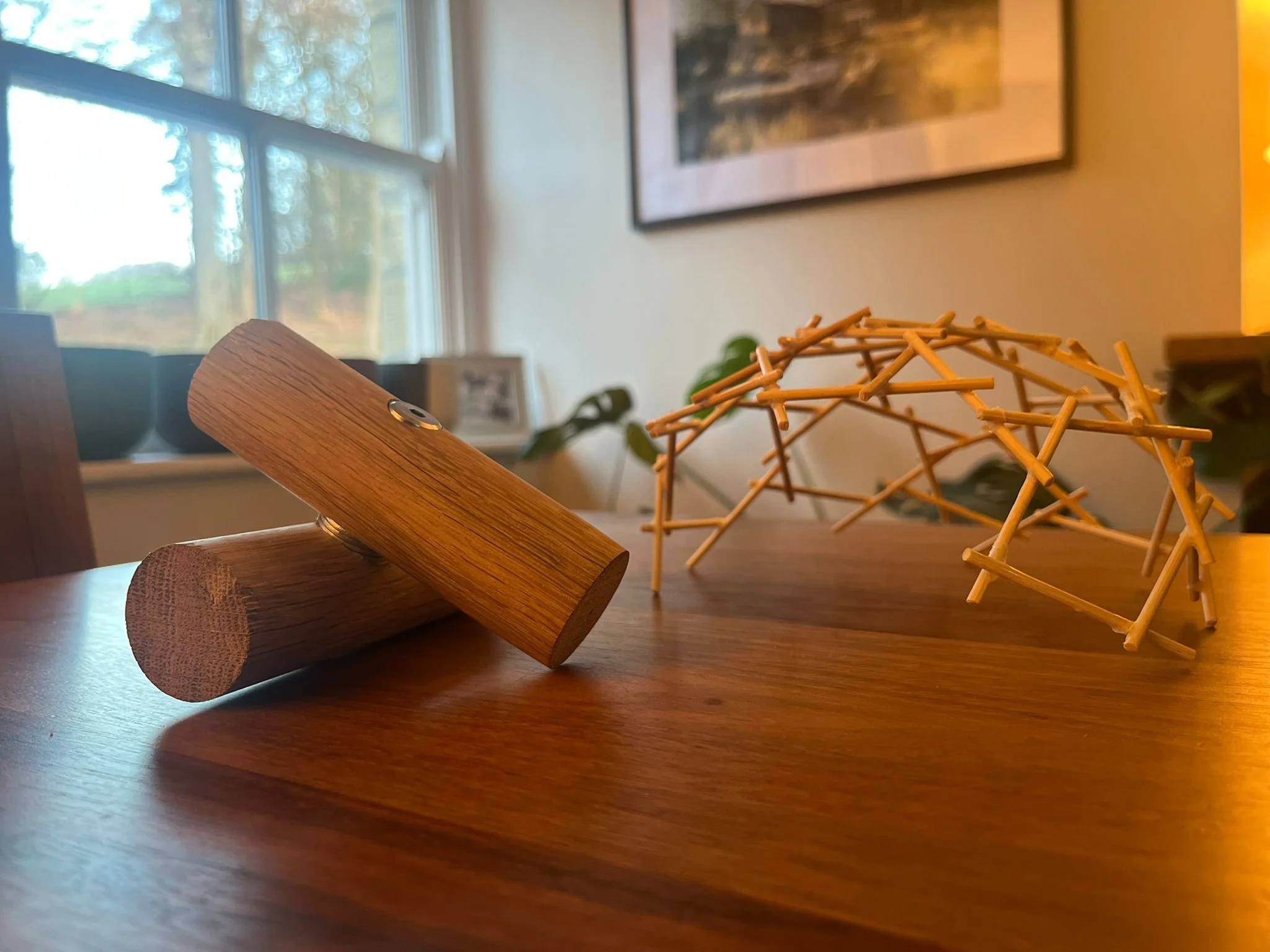
Bringing in the craftsmanship of Non Standard Studio
With the design and engineering foundations in place, the next step was to bring the right maker into the process. For this, we’re working with Marcus Jacka at Non Standard Studio, whose mastery of timber and passion for innovative structures make him the perfect collaborator.
Marcus has taken our ideas, calculations, and models and begun shaping them into the physical frame itself. Watching the structure evolve in his workshop — moving from concept to craft, from digital drawings to solid wood — has been one of the most exciting stages of the journey so far.
Every beam he shapes carries both the precision of engineering and the warmth of traditional craftsmanship.
A structure with a story
As the reciprocal frame progresses, it is becoming more than just a central feature of the garden. It’s becoming a storytelling device, a place where visitors can pause, reflect, and consider how interconnected we all are in the fight against hunger.
Its form reminds us that solutions come when people support one another. Its construction reflects the collaborative spirit at the heart of this project. And its presence in the garden will embody the values we hope to share with everyone who walks through it next May.