
The art of garden sculpture: transforming your outdoor space (part one)
For our clients, gardens serve as an extension of their living spaces—a place where beauty, relaxation, and personal style come together. One of the most impactful ways to enhance these outdoor sanctuaries is through the use of sculpture. Far more than mere decoration, sculptures can transform a garden, evoking emotion, making a statement, and adding layers of sophistication and intrigue. In this first blog, we’ll explore the role of sculpture in garden design, the different types of materials and styles available, and how to thoughtfully incorporate these works of art to elevate your outdoor spaces.
Rob Hardy & Co is an award-winning garden design studio based in Yorkshire. Creating outdoor spaces across the North East and beyond, designed for the way you live.
Why sculpture belongs in the garden
Sculpture brings an artistic dimension that can complement the natural beauty of plants and landscape design. It offers contrast and focal points, drawing the eye and encouraging engagement with the space. Here are some of the key reasons why sculpture works so effectively in garden design:
1. Creating Focal Points in Garden Design
In any garden, visual anchors help lead the eye and create a sense of order and purpose. A well-placed sculpture acts as a central feature, providing a point of focus among the organic elements of the garden. This can be particularly useful in larger gardens, where distinct areas may benefit from their own focal pieces to bring harmony and cohesion.
2. Adding Structure, Geometry and Contrast
Gardens often follow soft, flowing lines, with plants and trees contributing to an ever-changing landscape. Sculpture introduces an element of structure, offering geometry and form that contrasts beautifully with the natural environment. Whether it's a sleek, modern piece or a more classical design, sculpture can introduce an architectural form to soften or heighten the tension between nature and art.
3. Personal Expression Through Art in the Garden
Sculpture provides an excellent opportunity for personal expression, allowing our clients to infuse their outdoor space with individuality. A sculpture can reflect the owner's tastes, values, or life experiences. Pieces of art add an additional layer of exclusivity and meaning to our outdoor spaces.
4. Creating Atmosphere and Emotional Tone
Sculpture can influence the mood and tone of a garden. A serene, contemplative piece might create an air of tranquillity, perfect for a meditation garden or quiet corner. Conversely, bold, abstract sculptures can energise a space, encouraging dynamic interaction and conversation.
5. Year-Round Interest in the Landscape
While plants can be seasonal, sculptures provide visual interest throughout the year. In the depths of winter, when perennial plants are often dormant, a sculpture remains an ever-present element of beauty, weathering the seasons and providing continuity between the changing landscapes of spring, summer, autumn, and winter.

Legacy by Rob Hardy & Co
Choosing the Right Style of Garden Sculpture
Selecting the right sculpture involves understanding both the style of the garden and the tastes of the client. For discerning clients, this balance is crucial to ensure that the piece complements rather than clashes with its surroundings. There are a wide variety of styles to choose from:
Classical Sculpture in Traditional Gardens
Classical sculptures, often inspired by Greek and Roman art, are a popular choice for formal or traditional gardens. These pieces tend to be made from stone or marble and often depict human figures or mythological themes. They offer an air of elegance and timelessness, making them particularly suited to grand estates or gardens that aim to evoke a sense of history and culture.
Modern and Contemporary Garden Sculpture
For clients with a taste for the avant-garde, modern and contemporary sculptures can introduce a bold, artistic element to the garden. These pieces often utilise abstract shapes, vibrant colours, and innovative materials like stainless steel, bronze, or resin. They are perfect for minimalist or cutting-edge landscape designs, offering a striking contrast against a more natural or pared-back garden scheme.
Organic and Nature-Inspired Sculpture
For a more subtle approach, sculptures inspired by natural forms—such as animals, plants, or abstract interpretations of natural elements—can create a seamless blend between art and environment. These pieces are often made from materials that harmonise with nature, such as wood, stone, or metals that develop a patina over time, like copper or bronze.
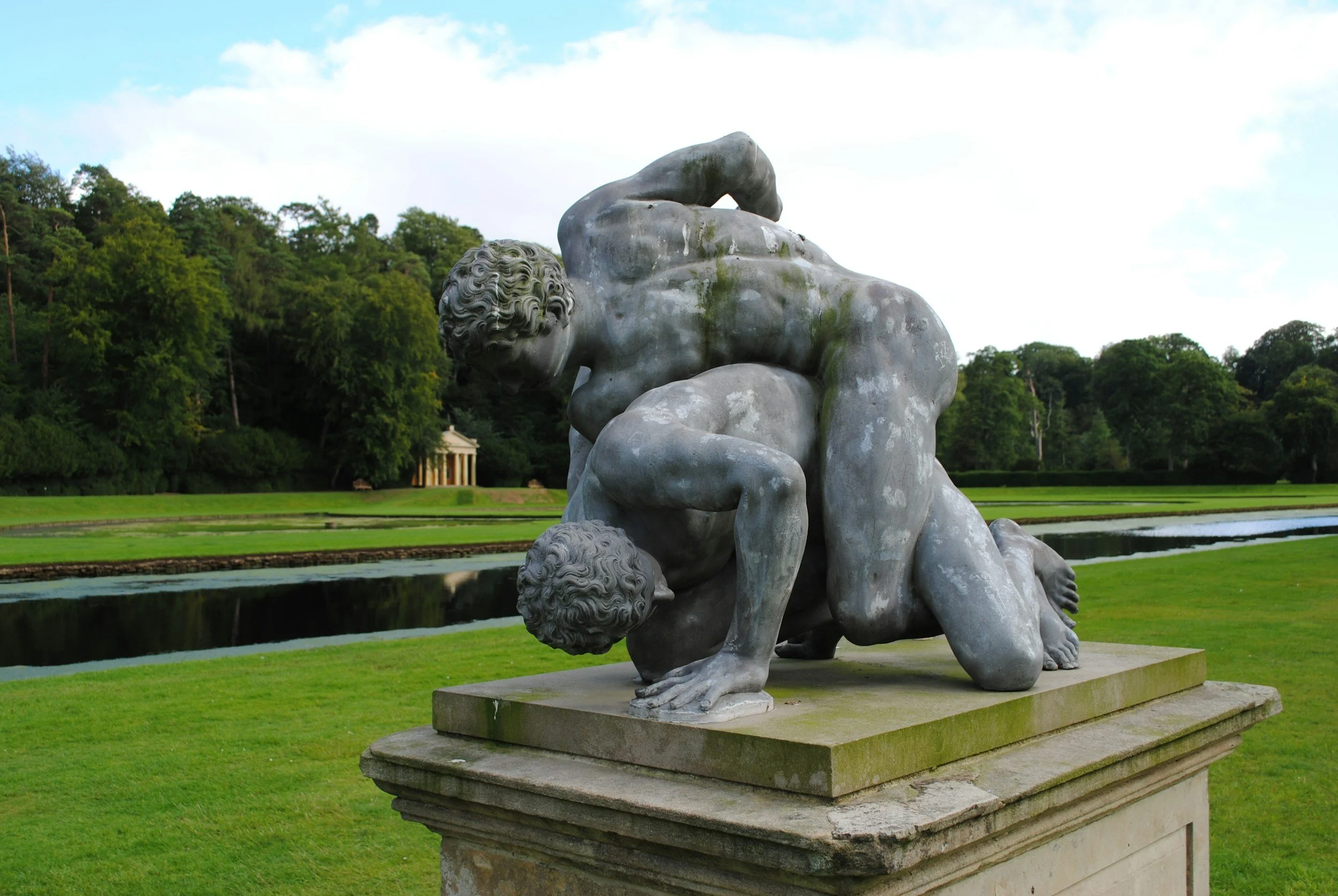
The Wrestlers by Andrew Carpenter

The interactive 'Four-square' by Barbara Hepworth
Final Thoughts: Sculpture as Part of a Living Landscape
Garden sculpture is not an addition at the end of a design process, but an integral part of it. When carefully chosen and thoughtfully placed, it enhances structure, deepens meaning and strengthens the relationship between house, garden and landscape.
Planning a Garden with Sculpture in Mind?
If you are considering incorporating sculpture into a garden design, early planning is key. The right piece can define a space for years to come, becoming part of the rhythm and identity of the garden itself.